


The design-build construction process has transformed the way businesses approach construction projects. It offers a seamless integration of design and construction, reducing complexity, improving communication, and delivering results more efficiently. For commercial property owners, the design-build model is a reliable and cost-effective method to bring their visions to life.
This guide provides a step-by-step breakdown of the design-build process, explaining its benefits and why it’s the preferred approach for many commercial contractors and property owners.
What Is the Design-Build Process?
The design-build process is a construction delivery method where one entity manages both the design and construction phases of a project. This single-source responsibility eliminates the disconnect that often occurs in traditional methods, where separate teams handle design and construction. Instead, the design-build team works collaboratively, ensuring a unified vision from start to finish.
For businesses, this approach minimizes delays, reduces costs, and streamlines communication. Working with an experienced commercial design-build contractor ensures that your project is executed efficiently and meets all expectations.
10 Steps of the Design-Build Process

1. Initial Consultation and Planning
Every project begins with a consultation between the business owner and the design and build team. During this stage, the team listens to your goals, vision, and functional requirements for the project. This discussion includes budget expectations, timeline constraints, and any specific needs for your commercial space.
The team also conducts a site evaluation to assess feasibility and identify potential challenges. This step lays the foundation for a successful project by aligning everyone’s expectations.
2. Defining the Scope of Work
The next phase involves defining the project’s scope. This includes outlining the size of the project, specific functionalities, and desired aesthetics. The scope of work acts as a blueprint for the entire project, ensuring that all parties have a clear understanding of the objectives.
A well-defined scope reduces misunderstandings and helps the commercial contractor plan for every phase of construction, from materials to labor.
3. Conceptual Design Creation
In this phase, the design-build team develops initial design concepts. These can include layout plans, floor sketches, and even 3D renderings to help you visualize the final outcome. The design focuses on balancing functionality with aesthetics, ensuring the space meets your business needs while reflecting your brand identity.
This stage is collaborative, allowing property owners to provide input and make adjustments before moving forward. Clear communication with your commercial design-build contractor ensures the design aligns with your vision.
4. Cost Estimation and Budgeting
Once the conceptual design is finalized, the team prepares a detailed cost estimate. Transparency is key here, as the design and build contractor ensures that the proposed budget aligns with your financial goals. This phase involves several key components:
- A comprehensive breakdown of costs, including labor, materials, permits, and contingency funds.
- Identification of cost-saving opportunities, such as alternative materials or construction methods.
- Open communication to align expectations and address potential adjustments before construction begins.
This thorough approach ensures that there are no surprises later in the project.
5. Detailed Design and Engineering
After the budget is approved, the project moves into the detailed design phase. Architects and engineers collaborate to create comprehensive technical drawings and blueprints. These documents ensure that every aspect of the project adheres to local building codes and industry standards.
This phase also includes structural engineering, electrical planning, and other technical elements to ensure the construction process runs smoothly. Working with a qualified design-build construction team ensures that all these details are handled expertly.
6. Permitting and Approvals
Obtaining the necessary permits is a critical step before construction can begin. The design-build contractor manages this process, including submitting applications, coordinating with local authorities, and addressing any compliance issues.
By handling the permitting process for you, the team ensures that the project progresses without unnecessary delays.
7. Pre-Construction Planning
In the pre-construction phase, the team finalizes timelines, schedules subcontractors, and orders materials. A detailed construction schedule is created, outlining each phase of the project. This plan ensures that the project stays on track and that all parties are aligned.
Risk management strategies are also developed at this stage. These include contingency plans to address potential challenges such as material shortages or weather delays, ensuring the project remains on schedule.
8. Construction Execution
With all plans and permits in place, construction begins. The commercial contractor oversees every aspect of the build, ensuring that the design is executed to specification. Regular progress updates keep business owners informed and allow for any necessary adjustments to be made in real time.
The integration of design and construction within one team ensures that any issues are resolved promptly, minimizing delays and maintaining the project’s momentum.
9. Quality Control and Inspections
As construction nears completion, the focus shifts to quality control. The design-build team conducts thorough inspections to ensure that all work meets industry standards and adheres to the approved design. This includes checking structural integrity, plumbing, electrical systems, and overall finishes.
Collaboration with local inspectors ensures that the project complies with all regulatory requirements, paving the way for final approvals.
10. Handover and Post-Construction Support
The final phase is the handover, where the completed project is presented to the business owner. The design and build contractor conducts a walkthrough to address any final questions or concerns. They also provide documentation such as warranties and maintenance guidelines to help you manage the property.
Many design-build teams offer post-construction support, addressing minor issues that may arise after occupancy. This ongoing partnership ensures a smooth transition into your new or renovated space.
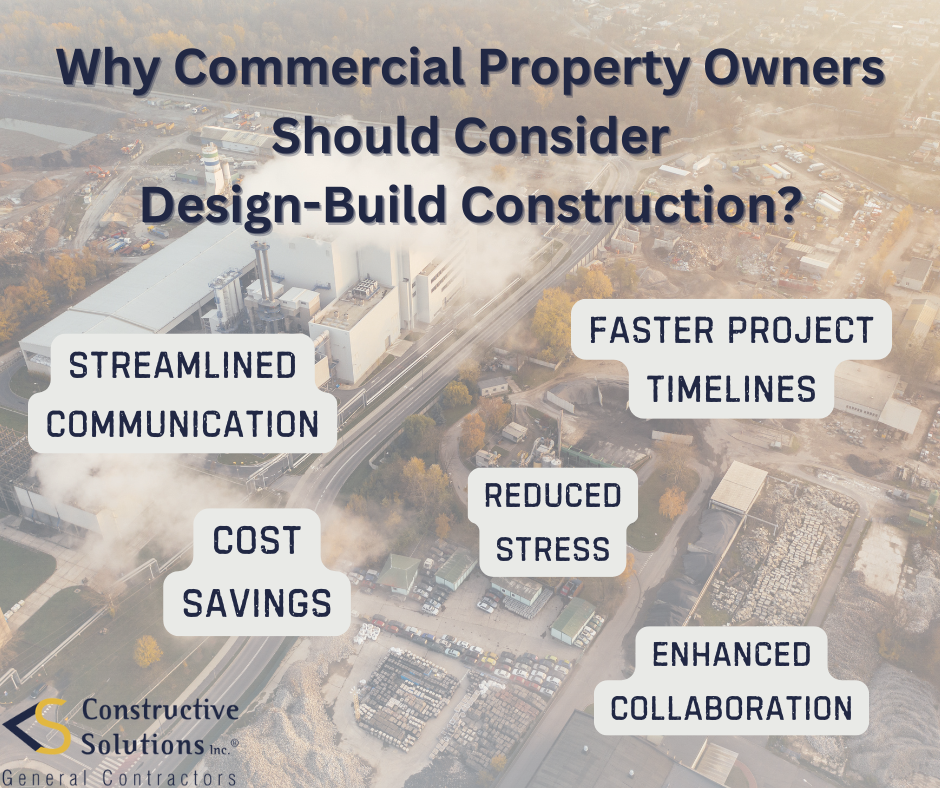
Why Commercial Property Owners Should Consider
Design-Build Construction?
The design-build process offers several advantages for businesses:
- Streamlined Communication: With one point of contact, there is less risk of miscommunication and delays.
- Faster Project Timelines: Overlapping the design and construction phases accelerates project completion.
- Cost Savings: Collaborative planning helps identify cost-saving opportunities early.
- Enhanced Collaboration: A unified team ensures that the design and construction processes are perfectly aligned.
- Reduced Stress: With a single entity managing the project, business owners can focus on their operations without worrying about coordinating multiple teams.
For commercial property owners, these benefits make the design-build construction method an attractive option for new builds, renovations, and expansions.
Conclusion
From initial consultation to final walkthrough, the design-build process offers a streamlined and efficient approach to commercial construction. By combining design and construction under one roof, this model eliminates the complexities of traditional methods, ensuring projects are delivered on time and within budget.
Whether you’re planning a new commercial space or renovating an existing one, partnering with an experienced commercial design-build contractor can make all the difference. With the right team, your vision can move seamlessly from concept to completion, delivering a space that meets your needs and exceeds your expectations.
Partner with Constructive Solutions Inc., your trusted commercial design-build contractor, to transform your vision into reality with seamless, efficient, and expertly managed construction solutions tailored to your business needs.


